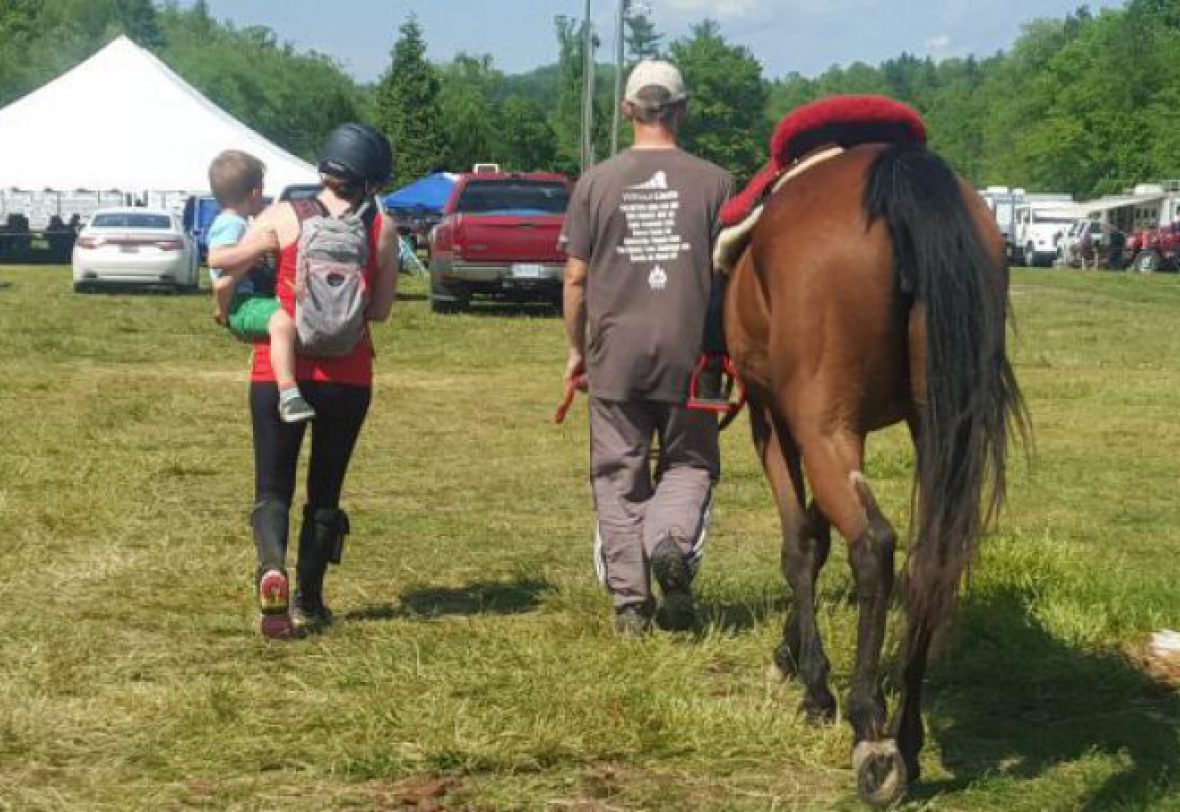

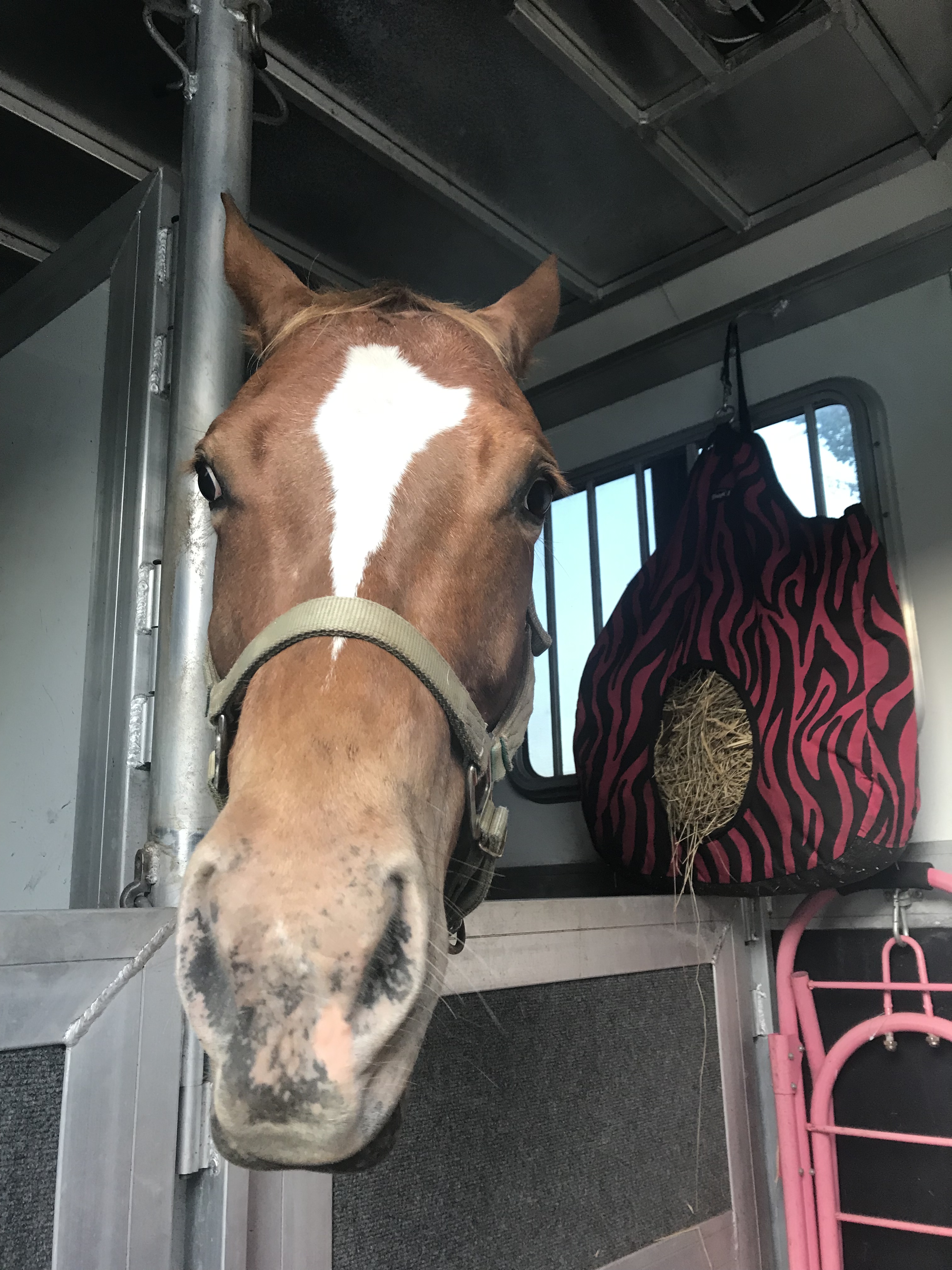
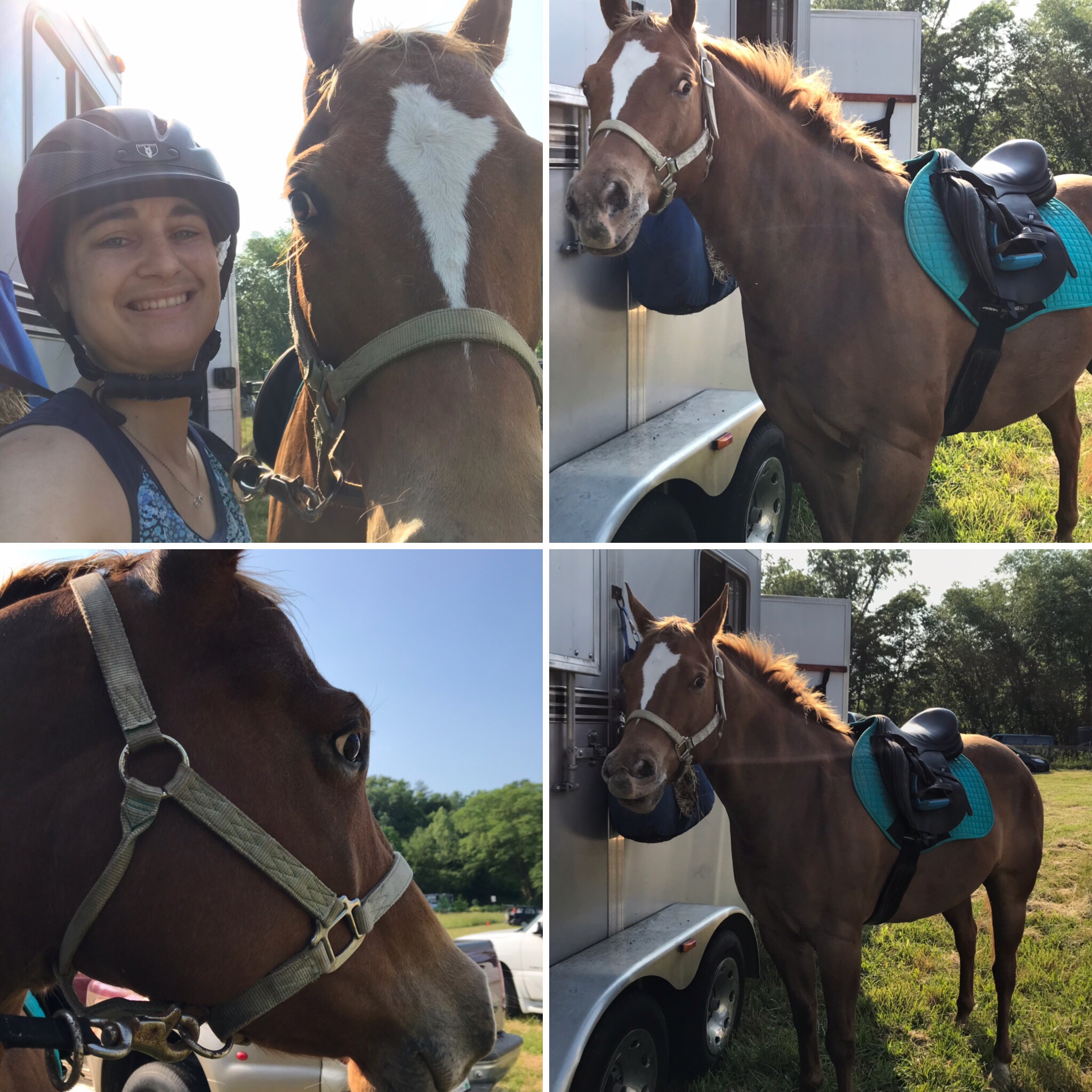
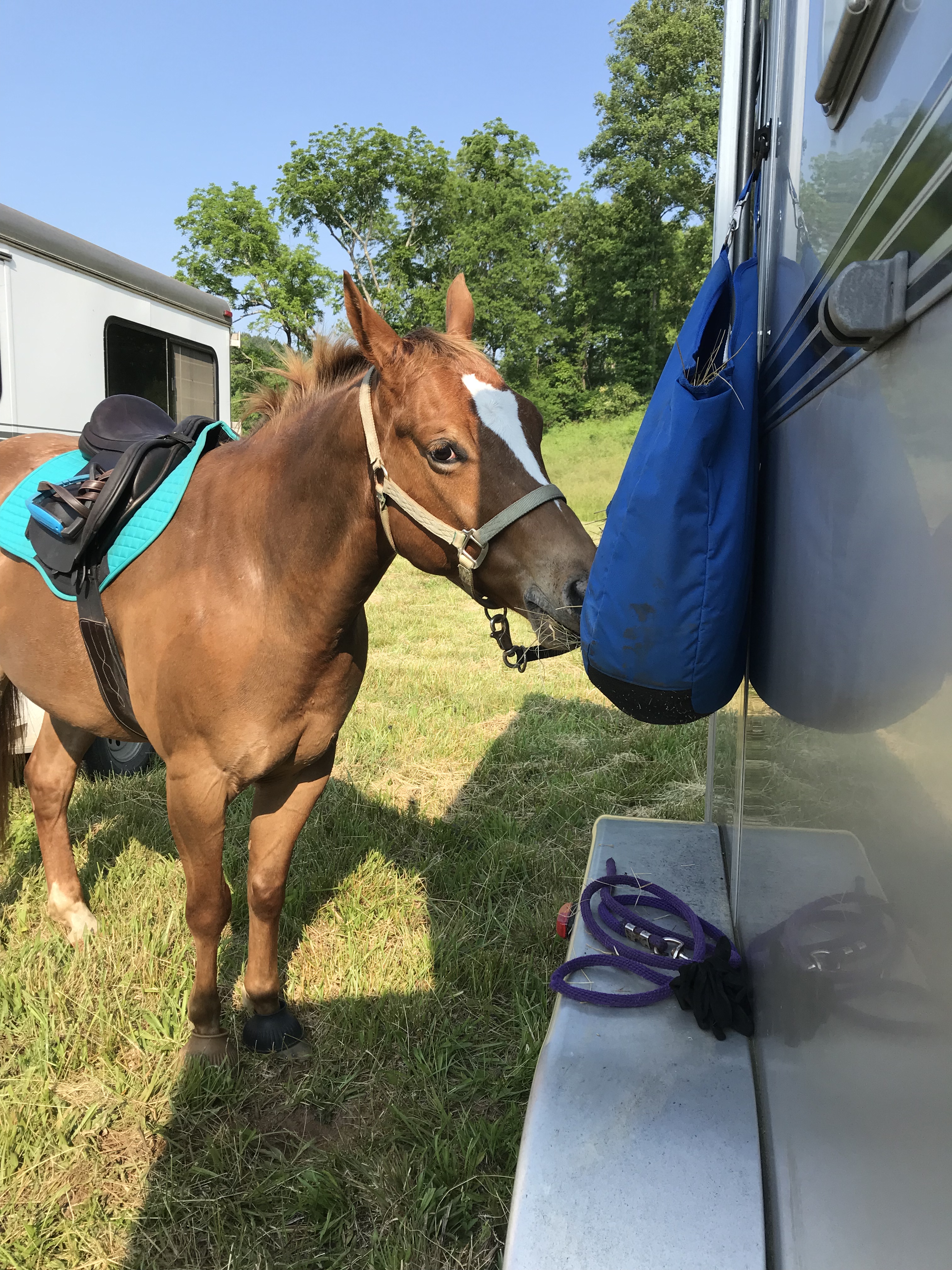
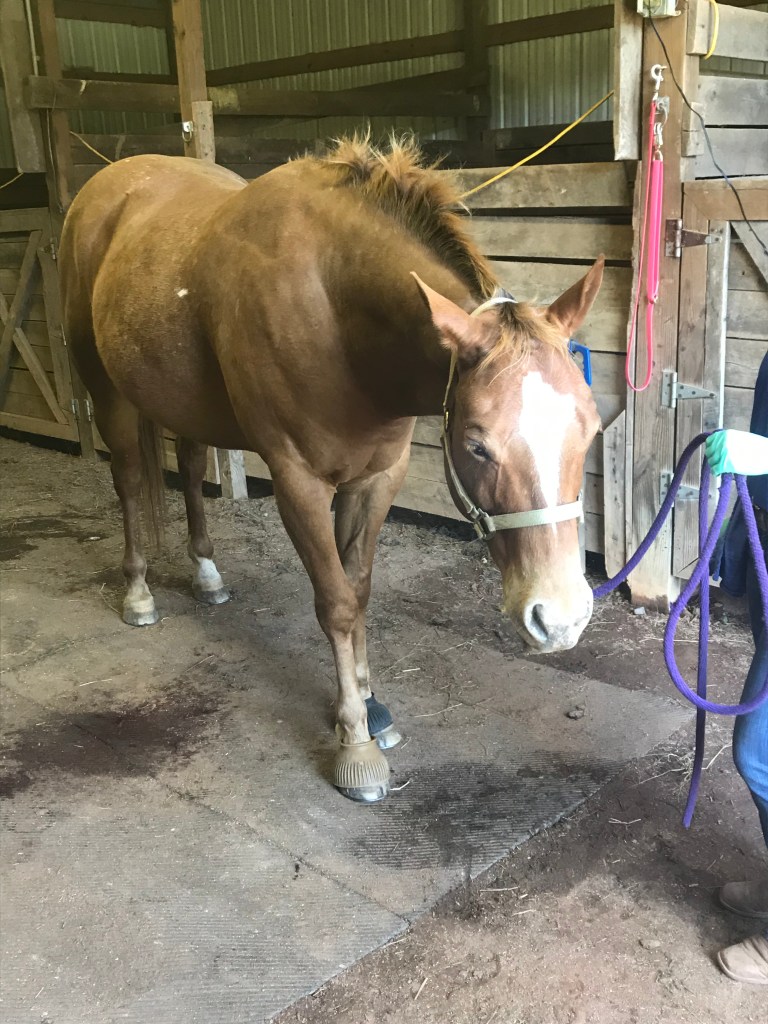
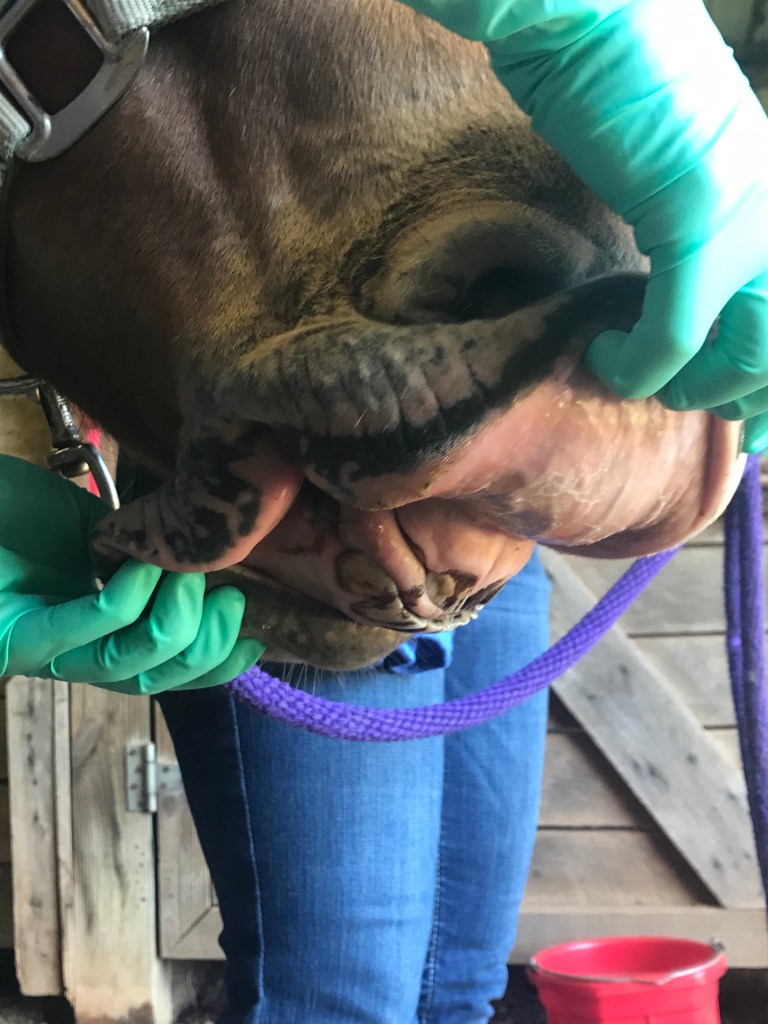
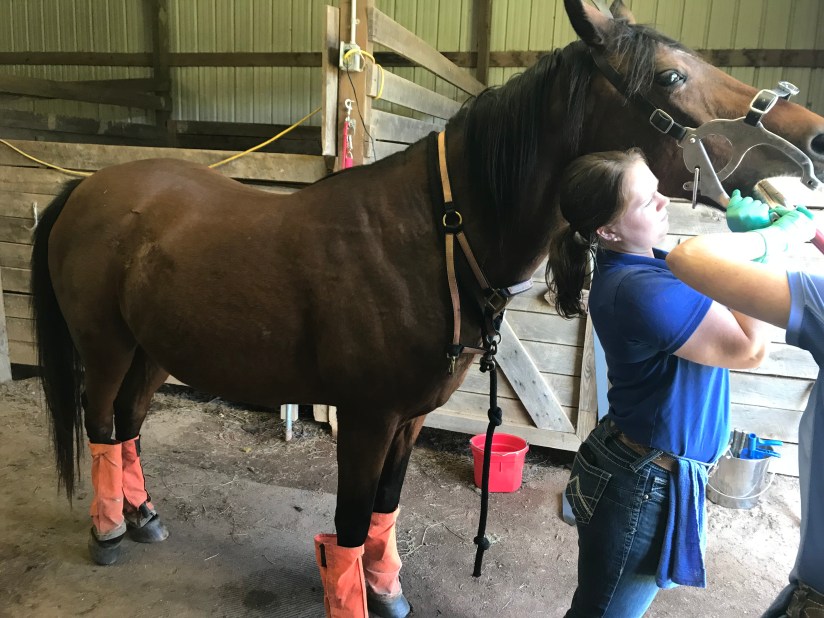
Remember when the equine dentist came and was concerned about Gemmie having Cushings? In her opinion, any horse over the age of 20 needs to be proven to not have it especially one that is on pasture 24/7 and is erm…a little portly.
It took a while for the hubby to get in contact with the rep from the company offering free testing, but eventually it got done and the blood was drawn for that plus Coggins. Hubby went ahead and ran the test on Pete too because he is 30 and it was free. Pete’s came back 100% normal in all regards. That guy is a tank. Gem’s, well her’s came back a bit meh. I

Her Cushings values all were normal, so no Cushings though right now I’d have preferred that as a diagnosis. It is really easy to manage with Prascend and the hubby can order it through work. Life doesn’t always give you the answers you want though.
While those results were normal, her insulin was at 70, normal is 40, and her glucose was up as well though I do not know that value off the top of my head. Neither were impressively high, but they certainly weren’t normal either. These results point to EMS and the recommendation was to retest in 6 months. Dusty is reaching out to the equine dentist for her opinion on the results (she was a full care equine vet before reducing down to acupuncture/chiro and dental only). In the meantime, I started my own research and picking of the brain.
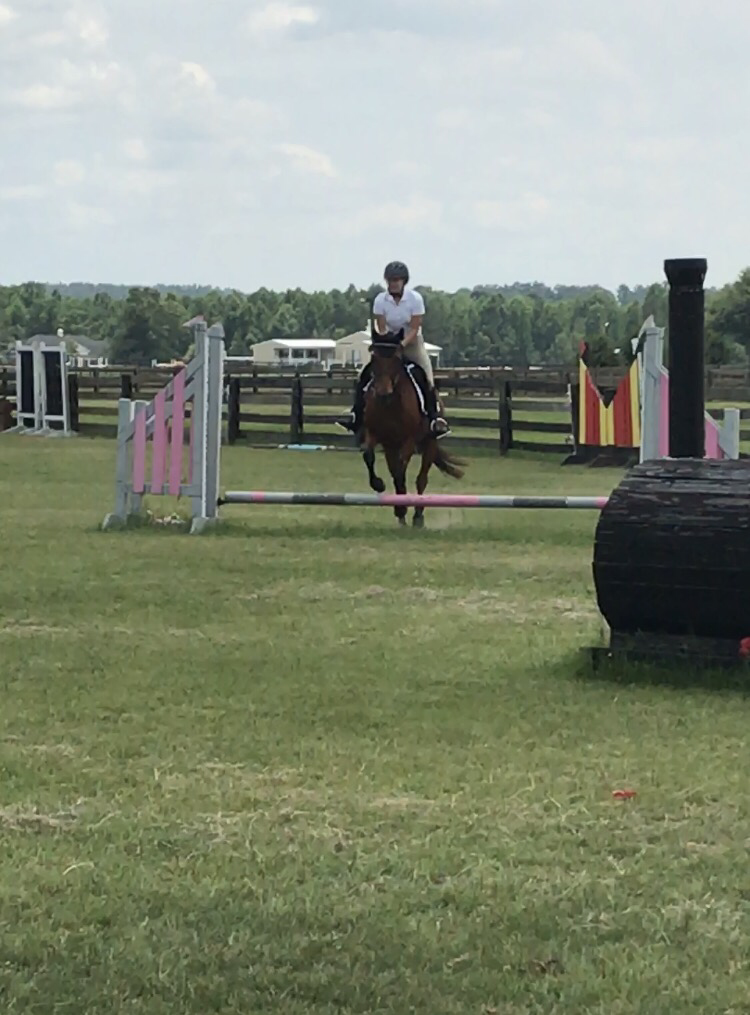
EMS is Equine Metabolic Syndrome is basically Type 2 Diabetes in horses. Increased fat cells make the body resistant to insulin so the pancreas pumps more out to get a response and serum glucose levels remain elevated. The biggest risk is laminitis. Gem is over weight but she is more like a 7.5 or 8 on the BCS, not obese like most of the ponies and horses I saw online with the condition, but she is also pretty low on the test values. In general treatment is aimed at lifestyle changes much like it humans with early and mild Type 2 diabetes: eat less sugar and exercise more.
The recommendation is for grain to be under 10% NSC and I immediately checked her bag of feed when I got home yesterday. It is 12.8% but is a ration balancer and she gets maybe 1 pound total a day. Math makes my head hurt, but after doing some figuring she gets extremely little in her feed, so we are good there. I’ve not had her hay tested, but she also hasn’t had any hay since the grass started coming in several months ago, so that is an avenue I’ll explore come the end of summer/early fall. It should be ok from preliminary research as she gets a fescue/bermuda mix and that is pretty low in general.
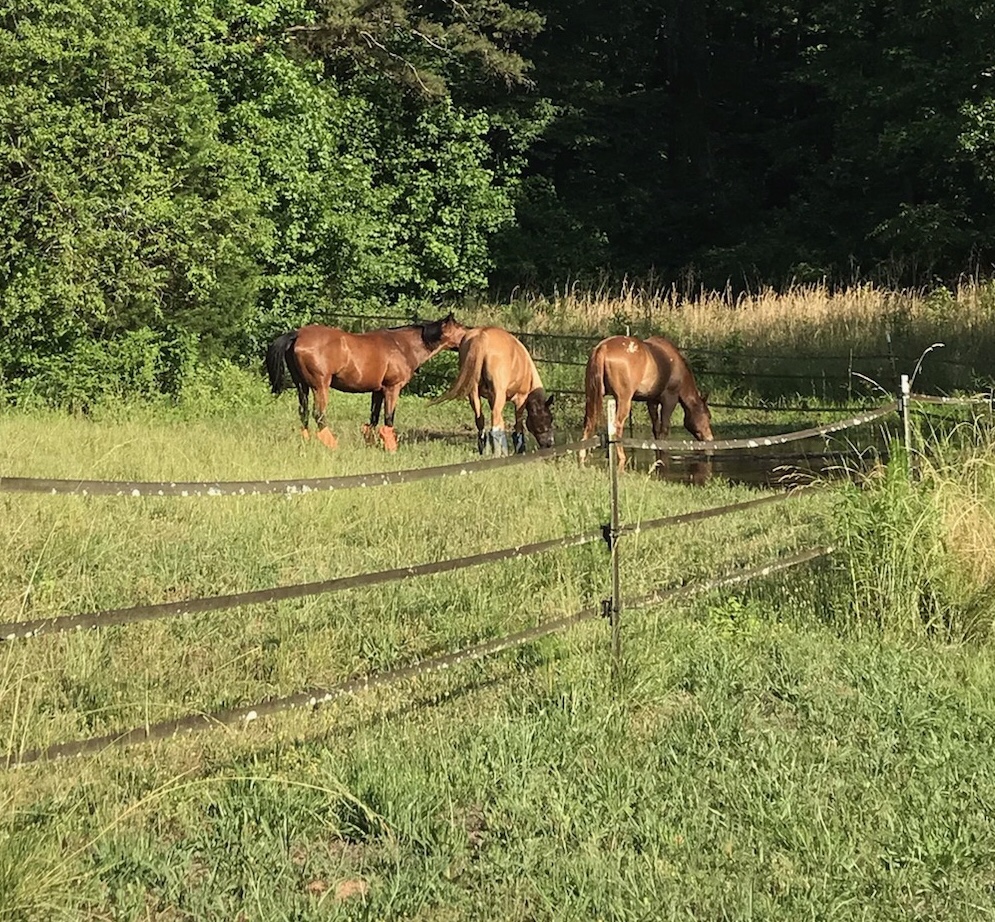
Her biggest nemesis is the grass under her feet and the fact that she is retired. Right now the grass is basically yellow straw from the high heat, constant blazing sun and no rain in weeks. It is literally crunching under our feet. A grazing muzzle may be in her future but that is my last resort. I know plenty of people use them and that is fine. I personally hate them. I hate anything on a horse’s face in pasture with others, it is a safety risk, plus they screw up their teeth something fierce. It is better than laminitis though, so we will see if I have to go down that route. I’ll do it before I let her hooves go to crap, but I think tackling her exercise and weight is a better option.
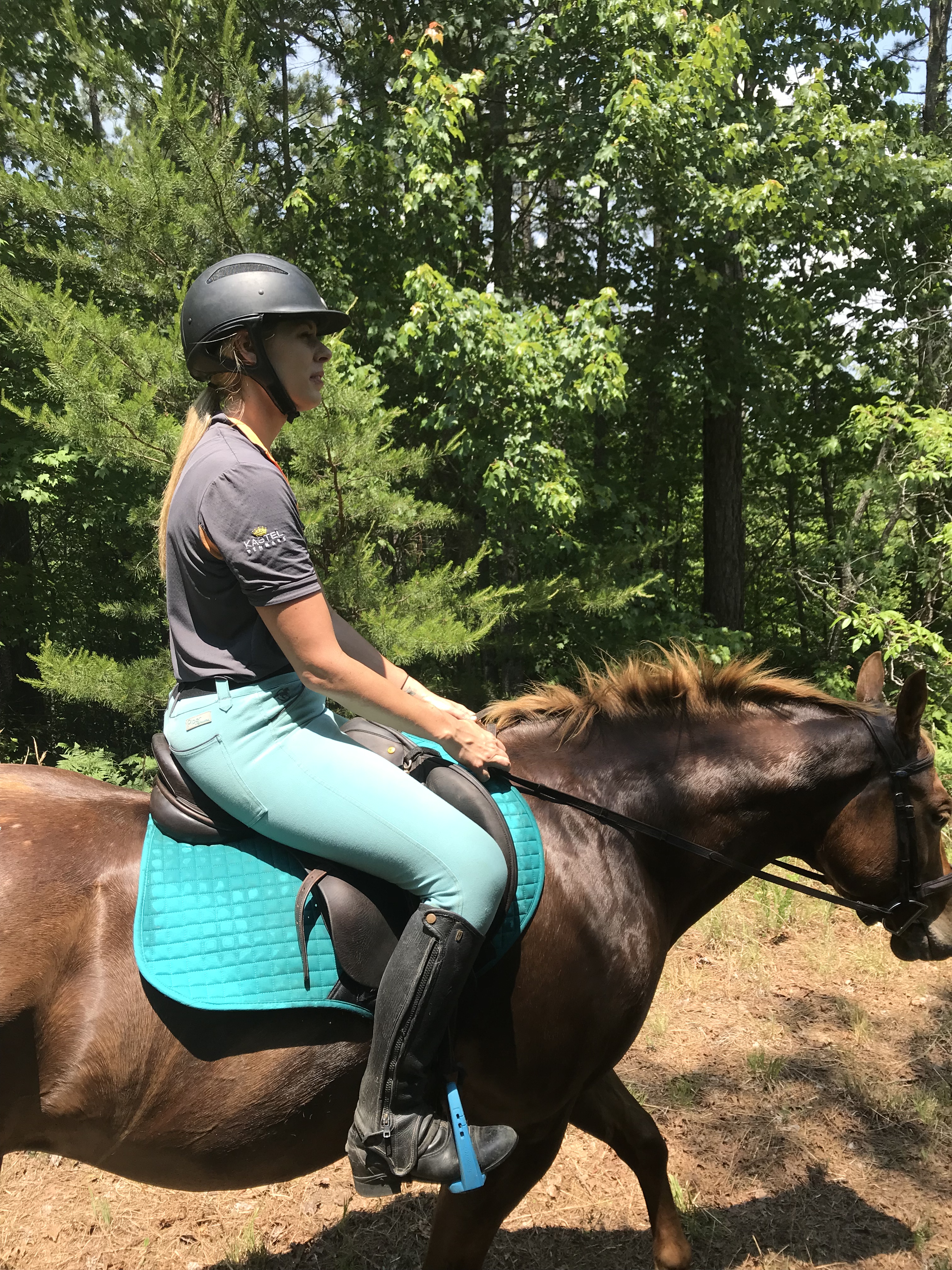
The recommendation here is to exercise 30 minutes 2-3 times a week. Get those extra…erm 100….pounds off and get the body responding to itself better. Except this is me we are talking about here and there is always an issue. Time. I barely get the time to ride Eeyore, my hopeful competition horse, ridden 2-3 times a week for 30 minutes. There is no way I can sneak in 6 rides a week total. Won’t happen. Hard stop.
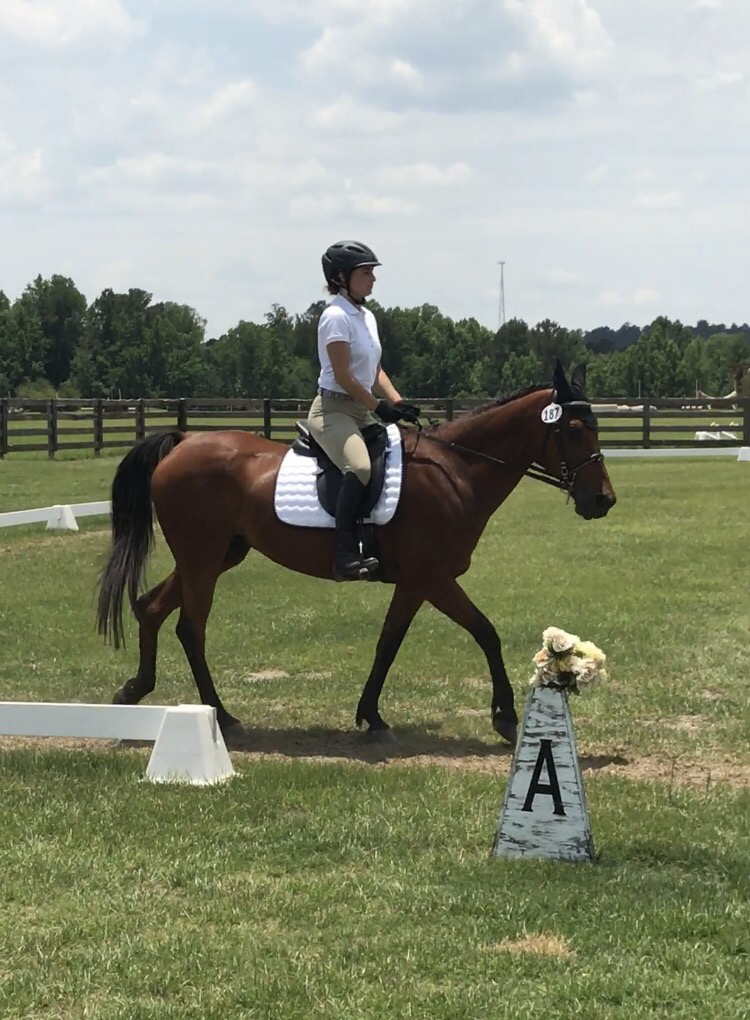
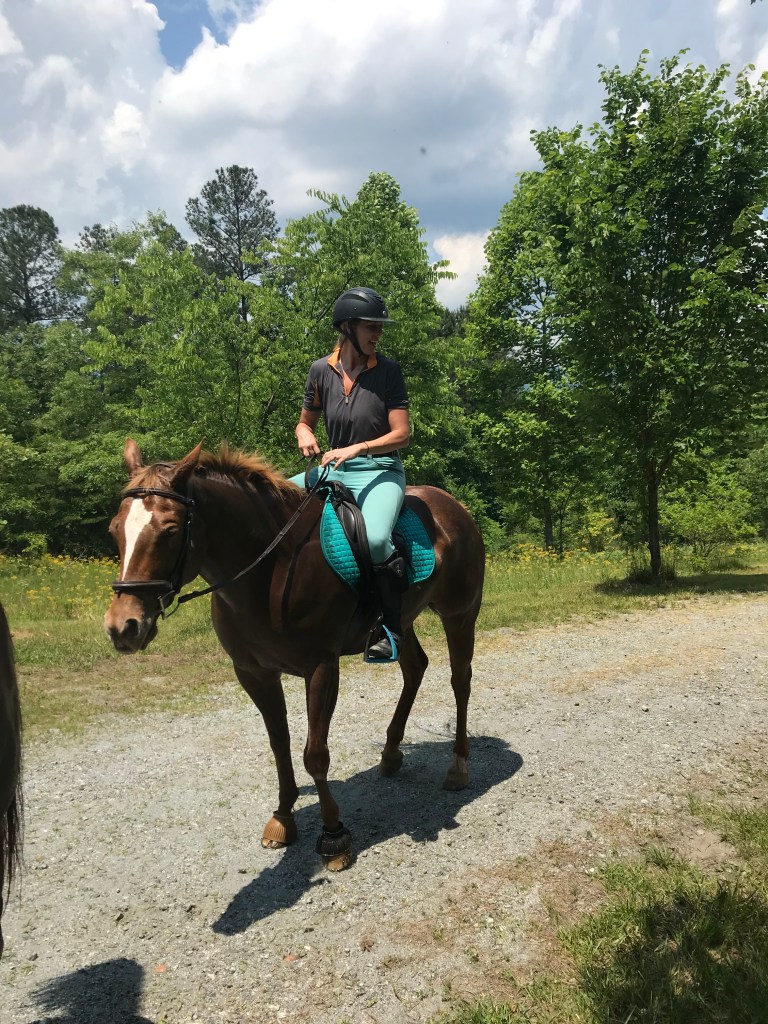
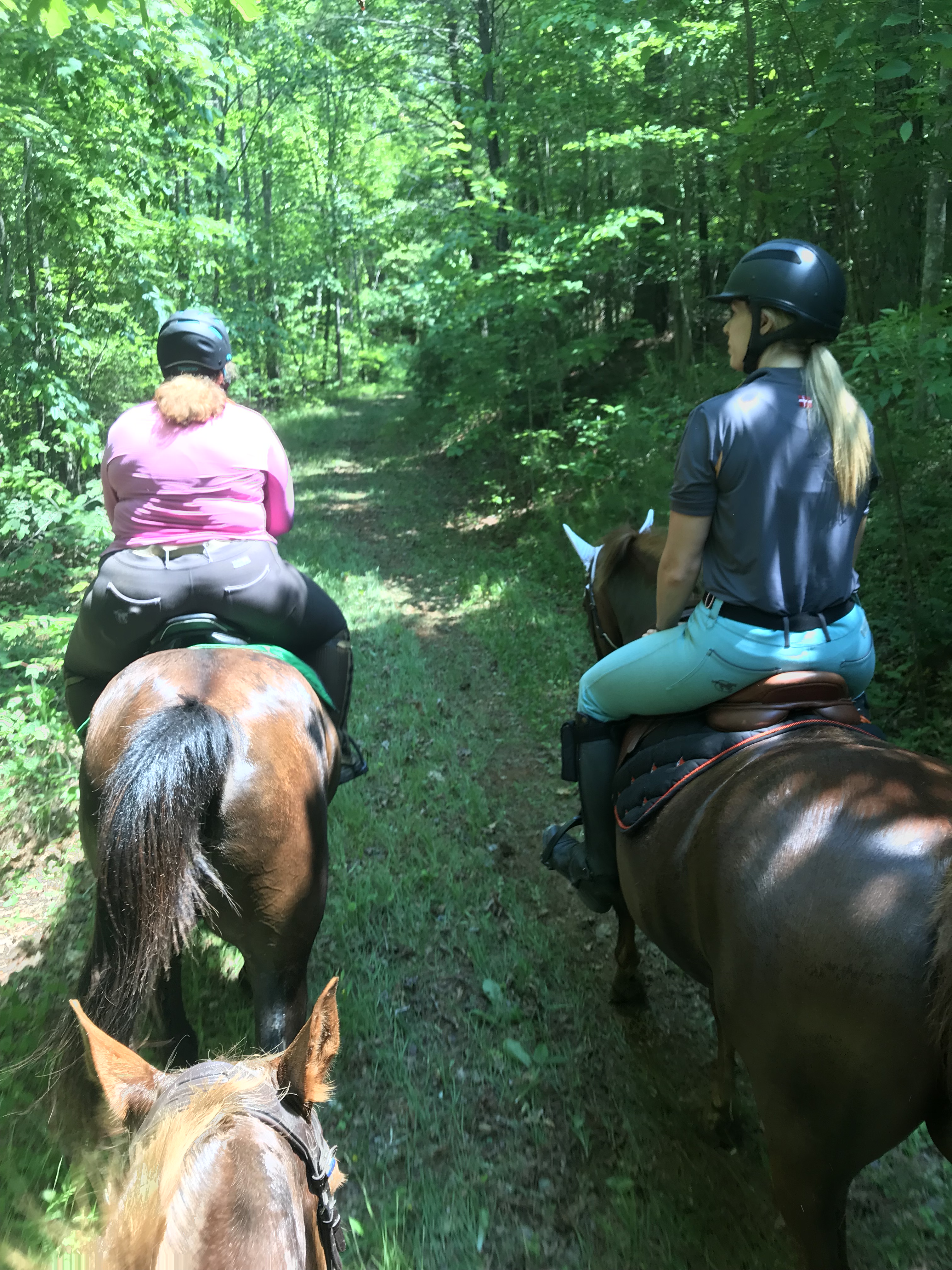
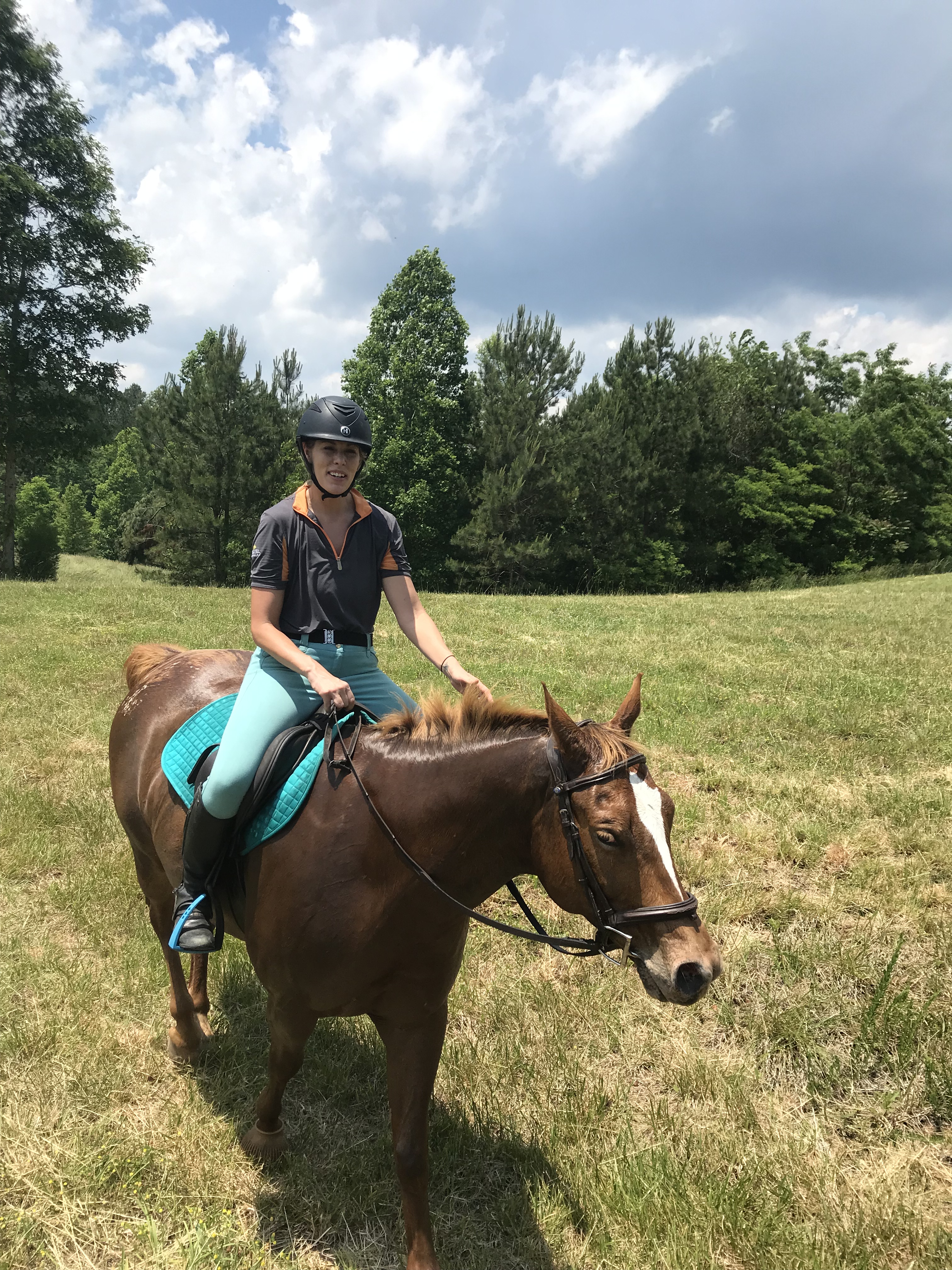
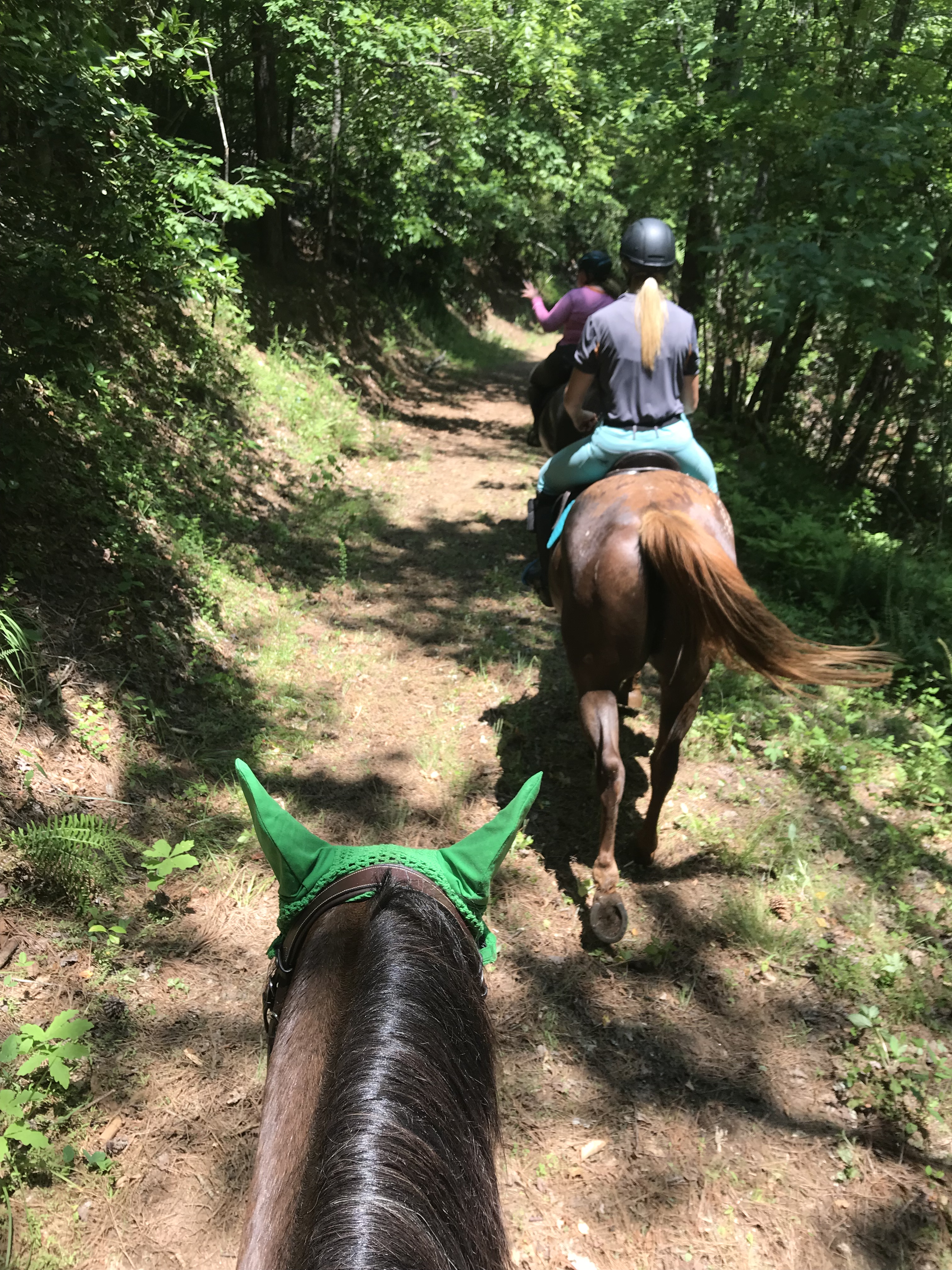
This is where I wish I was in a boarding situation with a big barn rat population of kids dying to get on anything that can move. It would be easy to find enough butts to w/t/c her around or hack her out (her specialty) for 30 minutes or so a few times a week. Instead I may need to get creative on finding some warm butts to do it for me. I worry about the liability and will need to check with my insurance company to see if I need to add anything to the policy to cover myself in case someone comes to ride her and gets hurt. She is pretty safe, but she isn’t point and shoot simple and you just never know with horses. Having someone come out would also only work while we are also home. We do not own a boarding facility, this is our private home, and I would not be comfortable with them coming when I wasn’t around. It will be a bit tricky, but hopefully the right person or person’s come out of the wood work to ride a horse for free a few days a week.
I believe that if I can get her back to a shape other than round, that her blood work will return to the normal range without anything drastic happening. There are two medications that can be tried but the research all highly recommends lifestyle changes first. Metformin, a human diabetes medication, can reduce intestinal resorption of glucose therefore helping reduce intake though it seems to have little benefit overall. Levothyroxine, a medication for hypothyroidism, has shown some benefit in increasing metabolism and helping to shed the pounds. Its interesting, to a geek like me with medical stuff anyway, in that there are no reported cases in hyperthyroidism with use. I would rather not go down either of those paths at the moment.
So…first we will be retesting in 6 months to see where her values lie. In the meantime, the summer grass is poor quality, she already gets no grain and what she does get in a balancer is low NSC, they are not eating hay at the moment (it is always available in their stalls but they ignore it when the grass is in), and she will be pulled from retirement much to her chagrin so she can lose those pesky 100 lbs she has gained from living the life of luxury.
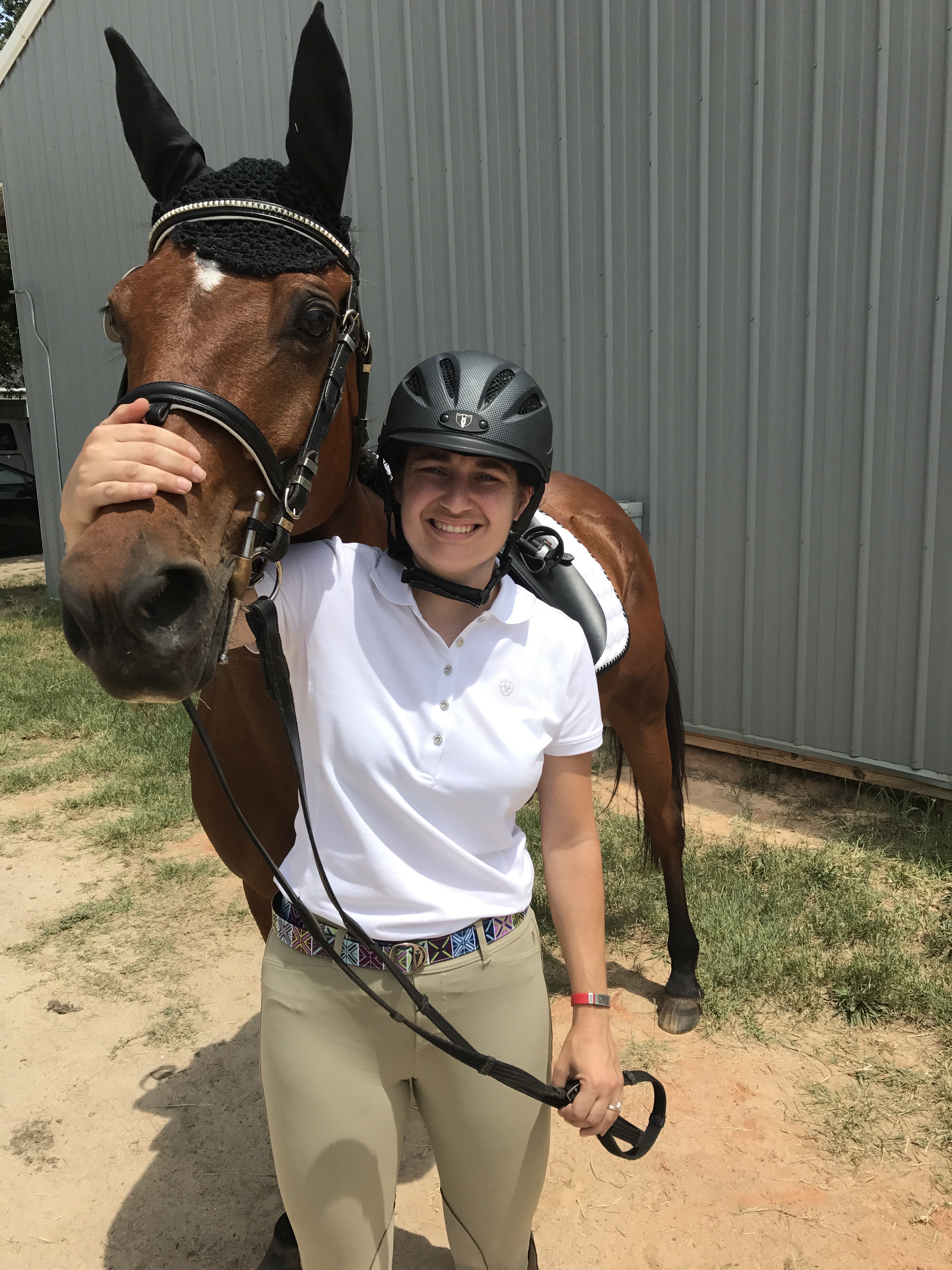
If anyone has any suggestions as to finding a rider to come exercise her a few days a week , I am all ears. Not being a part of a barn family does hurt in a lot of ways sometimes.






















 The Roaming Rider